Showing posts with label Leadership. Show all posts

Friday, January 26, 2018

Is Being a GENEX Delegate for You?

If you have been following along on our social media channels this week, you know it was GENEX Annual Meeting time. Perhaps you read some of the posts and wondered who our delegates were. If you are a GENEX member, they are just like you - farm men and women from across the U.S. who are willing to give a few days of their year to the governance of their cooperative. Want to know a little more about the process? Read on.

First we will start with the commitment. 
Delegates are elected yearly and attend a regional fall delegate meeting, where new cooperative information is shared and various topics are presented for input. GENEX is fortunate to be able to utilize the expertise of our delegates and have incorporated many suggestions and ideas into our plan of work.

In addition to the fall delegate meetings, delegates also participate in the annual meeting. This two-day event includes the business meeting, as well as a variety of educational breakout sessions. Take a look at our Facebook or Twitter accounts for more on what took place this year.
A speaker from DMI talks with delegates on protecting their farm from activists.
So who are our delegates?
I have been able to write about several of our delegates over the past couple of years. You may be interested to learn more about Ron Koetsier from California, Scott Erthum from Nebraska, or Alexa Kayhart from Vermont. I also recently interviewed Rachel Freund from Connecticut. You can find that article in the January Horizons, Dairy Edition on pages 20 and 21.

While our delegate are from across the country and appear to be very diverse, they are all very similar in their desire to help the cooperative they are a part of. All of the ones I have interviewed will also tell you they feel they get a tremendous return on their investment as well. Being able to grow their network and learning more about the cooperative are probably two of the biggest rewards these men and women receive.

Is it your time?
Now that you know more about how the governance of your cooperative functions, are you ready to help as well? Contact Terri Dallas, VP of Communications at tdallas@crinet.com.

Friday, August 4, 2017

Now I Can Retire

By: Doug Wilson, CRI CEO

After 49 years in the A.I. industry, it is time to move on to my second career and become a full-time farmer. One-half of my career was spent in direct cattle genetics work and one-half indirectly through general management.

Years ago, as the Director of Dairy Cattle Breeding at ABS, I had the opportunity to hire the late Morris Ewing as a sire analyst. Morris had been on the genetic staff at Curtiss Breeding Service and was the first industry sire person with a master’s degree in genetics. Morris was a great cow man, an exceptional educator, a Jersey lover and considered a giant in his time.

Morris and I often traveled together. He would joke that when we retire we should write an article that expresses our largest disappointment. His idea was to tell it like it is if, at retirement, it would not harm the organization we worked for. During my last 39 years spent with GENEX and its predecessors, I have kept that discussion in mind. I’m retiring next week, so thought now is the time to write that article.


As further background, it is important to know I love the show ring. I have shown horses, pigs, beef and homing pigeons at local and state levels. At the national level, I have exhibited dogs, sheep, and dairy. In fact, in 2017, I have been at 10 sheep shows and have five more to go.

Decade after decade after decade.
In 1979, linear evaluation of dairy cows was launched using a 50-point scale. This provided data for research so we could finally answer the long-debated issue of what the most profitable cow really looked like from a phenotypic viewpoint.

In 1985, GENEX predecessor 21st Century Genetics and Dr. Gene Freeman at Iowa State University presented the first research clearly illustrating the medium stature cow (57 to 58 inches at the withers) was the longest lasting, most efficient cow. This was 35 years ago. During the five years that followed, eight other research papers were published, which all supported the medium size cow was best.

Equipped with this data, our cooperative launched a decades-long campaign to educate and sell the dairy industry on the goal of breeding for medium stature. We presented speeches at conferences, World Dairy Expo, state conventions, national conventions and around the globe. We developed many articles. The most controversial article was “The Cow in Fourth Place is Simply Too Tall.” During this time, we swam upstream in the sales world because of our stance.

We participated on committees and met with breed associates to encourage changes to reduce final score once a cow was above 58 inches. In 2014, we developed the Ideal Commercial Cow (ICC$) index to support our long-held belief.


My largest disappointment.
Perhaps we were simply poor communicators, but it took 30 years (three decades) before the industry began to change their attitude. During the last five years, the marketplace (driven by large commercial herd owners) has begun to penalize bulls that sire tall cows. Semen sales have shifted dramatically. Just the other week, I was informed the Holstein Association will be putting a slight negative weighting on stature in the TPI® formula.

A negative person might ask why it took three decades to change the industry’s opinion when it was overwhelming science that directed us. On the bright side, it is great the industry is now rapidly moving to a medium-sized cow to help improve profits at the herd level. We know it is right. We have known for a long time that it is right.

Now, while we know the show ring doesn’t always follow suit with the commercial side of the industry, the people who judge our shows hold an awesome responsibility. They greatly impact the goals and phenotypic direction of the breed. They greatly influence the global perception of U.S. genetics.

There is no doubt that judges have changed and are changing. Simply being tall does not win. This is great, but are judges doing enough when the science is so clear and the commercial dairy producers are sending such a clear signal? As a judge, you are an educator. Never underestimate how many people you influence. You can set a new standard. If the cow is above 58 inches, put her in fourth. There are plenty of great uddered, good foot and leg, open ribbed and balanced medium-sized cows. I have watched judges entirely change stature or frame goals in other species. Why not dairy? I am fairly sure breed associations will follow and reduce final score as cows get taller.

There it is, Morris. My biggest disappointment in a 49-year career is the length of time it has taken for the industry to realize the medium-sized cow is the most profitable AND the time it continues to take for the show ring to follow suit. Thank goodness it is changing, but it took way too long and cost far too much money. Now I can retire! 


About the Author:
Doug Wilson grew up on a dairy and beef farm near St. Charles, Iowa. While raising Guernsey and Angus cattle, he was active in cattle judging contests and was named the Iowa State Outstanding Dairy 4-H Member. Doug chose Iowa State University as his alma mater, and received a bachelor’s degree in dairy science.

He began his career in the dairy cattle breeding department of ABS. Later, he accepted the position of director of genetic programs at 21st Century Genetics (a GENEX predecessor). He served as GENEX chief operating officer before becoming CEO of Cooperative Resources International (the parent company of GENEX).

During his 49 years in the agriculture industry, Doug has worked for the betterment of the industry specifically in the development of dairy genetic programs. He has become known worldwide as an industry leader and earned recognition as the World Dairy Expo Industry Person of the Year, Iowa State University Distinguished Dairy Science Graduate, University of Wisconsin-River Falls Distinguished Agriculturist and Dairy Shrine Guest of Honor. Doug is also a great advocate of youth in agriculture and has served on many committees that promote this mission.

Monday, February 6, 2017

Top 10 Reasons to be a GENEX delegate


The third week of January is often characterized by blowing snow and frigid temps, but in most cases, that doesn’t stop GENEX delegates from convening in Minneapolis, Minnesota, for the cooperative’s annual meeting. This year, delegates from 26 states made the trek. For repeat visitors, the annual meeting is a time to catch up with fellow producers and GENEX management. For new delegates, it’s an opportunity to really learn more about the inner workings of the co-op.

Much more than a meeting. While “annual meeting” may sound like a bore, the GENEX meeting is so much more! In addition to the business meeting and evening entertainment, the event includes educational opportunities. This year the co-op held five breakout sessions featuring 11 topics for delegates to gain cooperative or farm management insight. Topics ranged from cybersecurity to beef in Brazil and from research updates to the beef lineup and the Ideal Commercial Cow (ICC$) index. Time and time again, these breakout sessions are a fan favorite. This year was no different. Here’s what a few delegates had to say:

Delegates attend breakout sessions at the annual meeting
Your reasons. How does a GENEX member get the opportunity to attend the annual meeting? First, you must self-nominate to be a delegate. Then the members in your local membership district cast their vote on who should be a delegate. If you are elected, you are invited (and expected) to attend the annual meeting in January and an input meeting in the fall.


Why would you want to become a delegate and attend the annual meeting? Here’s the Top 10 reasons, as shared by delegates at this year’s GENEX annual meeting

   10. Gets you away from the farm or ranch and that daily routine!
    9. A chance to meet producers from across the country.
    8. It’s a matter of give and take (contribute to the co-op and learn).
    7. It’s a family affair – My family’s been members of co-ops since the 1920s.
    6. GENEX is the best show in town, and we want to keep it that way!
    5. Delegate input keeps the organization healthy.
    4. Reuniting with fellow delegates that I only see once a year.
    3. Cooperatives educate their delegates and members. 
    2. Find out the inside-scoop on the new happenings at GENEX.
    1. We got voted in!

If becoming a delegate and attending the annual meeting interests you, watch for your next opportunity to self-nominate. In the meantime, here's some additional highlights from this year's annual meeting:


Wednesday, December 21, 2016

From a Delegate's Point of View

GENEX recently wrapped up its fall delegate meetings. Nine different meetings took place giving delegates from across the country the chance to learn of changes taking place within GENEX and an opportunity to provide feedback for the future of the cooperative. I recently had the opportunity to speak with Ron Koetsier, a delegate from California on the delegate experience. Ron is a second generation dairy farmer who now farms in partnership with his son, Ron Jr. They milk 1,150 cows and farm 400 acres near Visalia.

What is the time commitment of being a GENEX delegate? 3 to 5 days a year, depending on where you live and where the meetings are located

Ron participating in the GENEX Fall Delegate Meeting.
What is your experience and/or history with cooperatives? We were members of Eastern A.I. (a GENEX predecessor). We are also members of Land O'Lakes Cooperative, and I have served as a Unit Delegate.

Why did you decide to become involved with GENEX governance? Because I then can provide input into what goes on in the cooperative. Delegate input really does matter. A recent example is the change in requirements to become a member. We were asked to provide our feedback, and the cooperative acted based on it. I also gain a lot of information from other delegates. It is certainly a learning experience. I learn way more than what I put in.

What advice do you have for others who may be considering becoming a delegate? Do it. You will pick up new ideas from the like-minded individuals you are around. It is very enlightening as you will find out how cooperatives operate. Becoming involved is an excellent growing opportunity and everyone can contribute, whether you have 50 or 5,000 cows.


Friday, October 28, 2016

Cooperatives Build A Better World

I recently got the chance to screen a PBS Visionaries documentary celebrating 100 years of cooperatives. Can I just say I smiled through the whole hour? Watching the seven stories of cooperatives both in the U.S. and abroad made me swell with pride, pride for belonging to something that is committed to helping one another as a part of the very principles that make up their business model. (Click here to learn about the seven co-op principles.

I am blessed to be not only employed by a cooperative, but also a member of several through our farm. In both of these capacities, I have seen the hard work put in by members, delegates, board members and employees to make an impact, not only in the communities they live in or serve, but across the globe, from little things that multiply to become big things, like Operation Round Up at my local electric co-op, to the amazing list of community organizations my credit union supports, to the work Cooperative Resources International (CRI) conducts through its Cooperative Development and Emerging Markets Programs.


CRI has been working in global outreach for nearly 20 years. A recently completed project in Nicaragua spanned five years as part of a $5 million, USAID funded, Cooperative Development Program (CDP). The project aimed to transform household-level dairy producers and their cooperatives into small scale commercial firms. Dean Gilge, AVP of Global Development for CRI notes, "It is heartening to hear someone such as Norman Montenegro, General Manager for Nicaragua's Asogamat Cooperative, describe the tremendous value the program has made in their operation. Norman credits CRI's help in strong governance foundation, designing a strategic plan and coaching them to success."
Dean Gilge (left) and Dan Diederich, CRI Board Member (right) learn about Quesillos, a tortilla with white cheese, cream cheese and onions, from the Quesillo store manager.
Milk arrives at the central milk collection center in Nicaragua via several modes of transportation.
Recent projects have also taken us to South Africa where CRI has worked with the beef cooperative Inkephu and the dairy cooperative Seven Stars. These businesses were chosen because of their accomplishments in showing an interest and desire to grow as sustainable cooperatives. Genex Board Member, Terry Frost had this to say upon returning from his time working with the co-ops, "While improvements need to be made, the cooperatives' hope for the future is evident. I feel the cooperative members want to improve for their community. These people are very proud of their culture and heritage. They just need the guidance and training the CDP can and is providing."
Genex Board Member, Terry Frost (front) inspects a feedlot with the Chairman of Inkephu Cooperative in South Africa.
Last year, a CRI Emerging Markets Program, with funding from the USDA, brought a delegation of 29 beef industry representatives from China, Kazakhstan, Pakistan and Russia to the U.S. The participants were key dicision makers from large beef operations, universities, agriculture ministries and processing facilities. The tour showcased the U.S. beef industry "from semen to cellophane."
And the CRI commitment to global development is far from over. With current projects in South Africa and the Dominican Republic, we hope to continue to make a difference in agriculture and communities world-wide. 

By the way, if you get a chance to check out the documentary coming to a PBS station near you this November, watch it.  You won’t regret the hour you spend!

Friday, October 21, 2016

Cooperatives Build Leaders

A productive cooperative depends on its member-owners to lead it forward. Indeed, the cooperative model of governance requires democratic member control. Where do cooperatives find these leaders? I believe it is the cooperative system itself that fosters the leadership development by giving them the opportunity to experience unique situations and network with others in their industry.

I recently spent some time at Ruedinger Farms Inc., in Van Dyne, Wisconsin, talking with our Cooperative Resources International (CRI) Board Chairman, John Ruedinger. His first-hand experience echoes the cooperatives build leaders message.
Perhaps you are interested in getting involved with cooperative governance, but worry you don't have the experience or time to be a delegate. Two of our current delegates, Alexa Kayhart and Scott Erthum, took a few moments to share their stories. Read how they balance farm/ranch life with being a delegate and the benefits they are receiving from the process.  

Just as cooperative delegates and board members build their leadership skills, employees of cooperatives, and in particular CRI and its subsidiary employees, are given many opportunities to shape their management skills as well. A big portion of this initiative includes our own REACH Leadership Courses. In addition, employees are supported in endeavors to enrich their leadership experiences outside of our cooperative as well. Programs such as Leadership Wisconsin and Leadership Shawano County are two examples where CRI employees have honed their leadership skills. In addition, CRI employees are encouraged to join groups and volunteer in their communities as a part of our company’s value of stewardship.

Genex Production Training and Education Specialist, David Lee Schneider (second from right), received the Alva Rankin Award. This memorial award is given to a graduating Leadership Wisconsin Fellow who exemplifies Al’s strong leadership and personal skills.
Members of the CRI Information and Public Relations team spent time assembling weekend meal packs for children from area schools who are in need.
Genex employees receiving National Association of Animal Breeders awards: Jim Cumming 1 Million Unit Sales (Georgia), Jim Engle 1 Million Unit Sales (Idaho), Doug Westenbroek 3.5 Million Unit Sales (California), Bill Casey 1 Million Unit Sales (Wisconsin), Jan Longacre 1 Million Unit Sales (New York) and George Shue 100,000 First Services (Pennsylvania).
Tom Lyon, former Cooperative Resources International CEO, accepting the National Association of Animal Breeders Pioneer Award for long-term distinguished service to the A.I. industry.
Stan Lock (left) was honored with the Service to the Beef Industry award at the Applied Reproductive Strategies in Beef Cattle workshop.

CRI prides itself in its people, and we know that the cooperative model of business has allowed us to become the company we are today. From our Board to our delegates and employees, we have the people who are willing to put in the time and effort, because cooperatives build leaders!

Monday, October 10, 2016

Cooperatives Build Innovation

It is no secret Genex Cooperative, Inc. and our predecessors have led the way in the A.I. industry. Have a look at some of our accomplishments and get a peek into our exciting future!


Genex looks forward to delivering new solutions to meet our industry's emerging needs.

Friday, September 23, 2016

CRI's Commitment to Employee Enrichment and Training

In today’s job market, attracting and keeping quality employees is paramount. I belong to a couple of dairy groups on Facebook and one of the most talked about topics is finding and retaining a workforce. Yesterday as I went to get a quick lunch, I happened to notice the abundance of help wanted signs in almost every business in town. So how can we compete? What do we need to do as baby boomers retire and millennials enter the job market?

I wish I had the answer for you, unfortunately I think it may require a combination of a lot of factors. One thing Cooperative Resources International (CRI) is committed to is an extensive employee enrichment and training initiative.  

I worked in a career for 13 years where my bosses threw professional development at us because it was required. I think if you would have asked them, they would have told you they were doing a great job with employee enrichment and training, therefore we were all engaged in our careers. They would have been wrong.

A quality employee enrichment and training program needs to be ongoing.

My old job put a big, fat check mark next to the ongoing thing. In fact, many times I felt like I was in a professional development workshop more than I was at my desk working. But don’t fall into the “been there, done that” mentality either. Just because you offered your employees a couple of training opportunities doesn’t mean you have a free pass to stop with the enrichment.

CRI began a program called REACH in 2011. REACH is a series of professional development
courses and projects to expand employees’ knowledge of the cooperative, its subsidiaries and the industry we serve, provide networking opportunities, and develop leadership and problem solving skills. To date, 385 employees have taken advantage of one or more of the levels of REACH.


A quality employee enrichment and training program needs to be employee driven.

When was the last time you asked your employees what they enjoy most about their job? Have you asked them if there are aspects of the farm or company they would like to learn more about? Would they like to try to take on a new responsibility? If you allow employees the opportunity to provide feedback about their job, they will become more engaged, as they are now in the driver’s seat. Now, I realize someone is still needed to do the dirty, mundane and often unsatisfying tasks, but if allowed to dream a little, those other jobs don’t seem so bad.

While the REACH curriculum is maintained by CRI management, it is constantly being updated based on past participant feedback. Projects that are extensively researched by REACH students come from employee and management identified opportunities and issues within the company.

Once an employee has completed some REACH training, he or she is also eligible for the new CRI Global Enrichment Program. The win-win nature of this program allows CRI employees to share their specific skill sets with those in our industry across the world on a specific international project. The employee then comes back to the U.S. with new enthusiasm and knowledge to help CRI and our members and customers prosper.

In addition to REACH and Global Enrichment, CRI employees are encouraged to look for other job-specific professional development opportunities. Many find professional organizations to join to again help with networking in the industry, as well as to learn new ways to accomplish their jobs.

Having a well-trained, engaged workforce doesn’t just happen; it takes work. CRI recognizes the importance of great employees and is committed to their professional growth so they can continue to deliver excellence, innovation and value to you, our members and customers.

So, what do you do to find and keep employees? Does your employer do an especially good job with making you feel valued through training and opportunities? We would love to hear about it in the comments section below!

Friday, February 19, 2016

The Changing Faces of Genex Delegates

Just as the face of agriculture is changing, so too is the Genex delegate demographic. New faces emerge every year, accepting the challenge of learning something new and representing the membership in their area. Being a part of the leadership team for your cooperative allows you to stay abreast of the latest developments, while putting you in contact with others in the industry who may be facing the same experiences as you, and most importantly it allows you to shape the future of YOUR cooperative.

Today I want to introduce you to Alexa Kayhart. She may not be what you think of when you envision a delegate of an agricultural cooperative, but Alexa is exactly what makes cooperative governance so powerful, because of the diversity and perspective she brings to meetings.

1. Tell us a little about yourself and your farming/ranching operation.
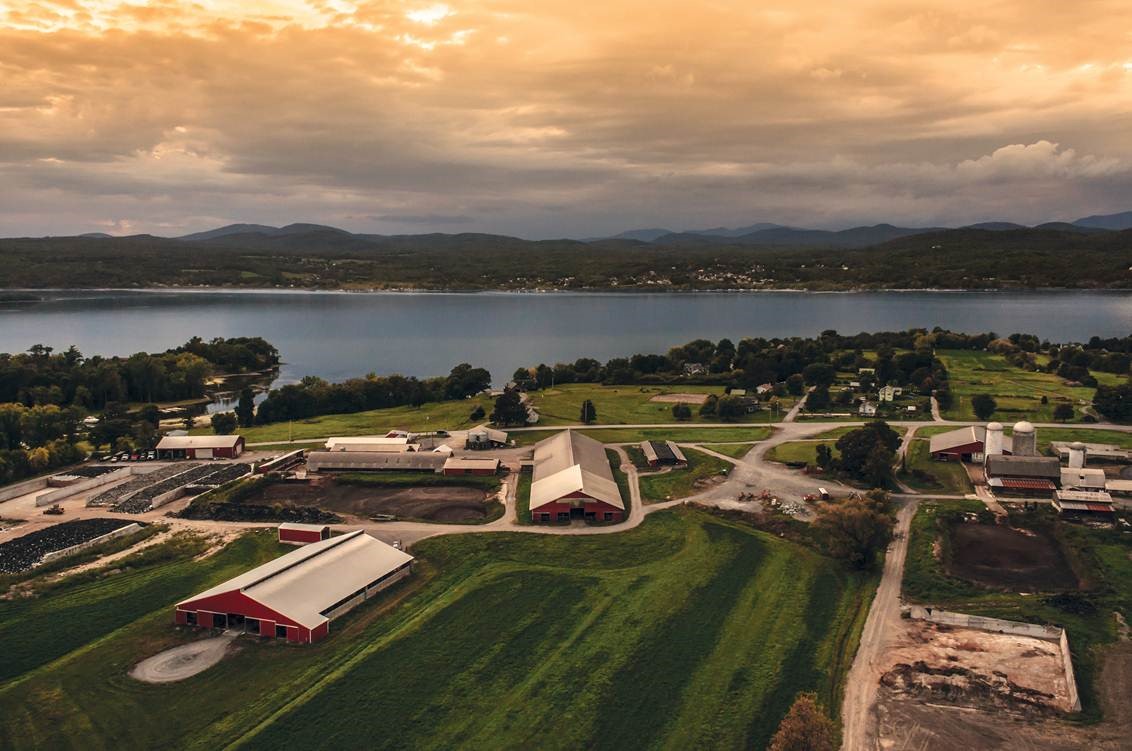
My name is Alexa Kayhart, I am a fourth generation dairy farmer in the beautiful town of Addison, Vermont, directly on the coast of Lake Champlain. I am 21 years old and a senior in college this year. I am finishing up my final year of school at Vermont Tech where I am studying diversified agriculture and entrepreneurship. My dad and uncle are at home running the farm where we currently milk 800 Holsteins. My plans are to finish up school, travel a bit and work with farmers all over the country before I return home to carry on the next generation of Kayhart Brothers Dairy!

2. Why did you decide to become a delegate?
Honestly? I did it because we needed an individual in our district and had no volunteers. I couldn't be happier that I was presented with the opportunity and only wonder why I didn't get involved earlier! As I sit here in the airport ready to go home from the CRI Annual Meeting, telling my story about being a delegate, I already can't wait for next year's meeting. It's a great opportunity to network and meet farmers from all over the world and
 simultaneously learn about the wonderful co-op we are a part of!

3. What are your duties and responsibilities as a delegate?
As a delegate, it is my main responsibility to relay information between the board of directors and the folks back home whether that be the technicians or other farmers. As a delegate we are expected to attend the annual meeting in Minnesota to participate in decision making and elections of new board members. Being an active delegate means learning about the co-op and helping to make decisions when necessary. We also get the opportunity to learn a lot about our co-op as well as positive ways to effectively promote the dairy industry, which we all know we need more of!

4. What type of time commitment is required of a delegate?
The time commitment isn’t much. We are asked to attend the annual meeting in Minnesota for two days in January and then also attend a regional meeting (only one day) in fall. All of the trips are reimbursed by CRI and the only thing that is asked of us is our presence.

5. As a newer annual meeting attendee, what has caught your attention?
This was my second year serving as a delegate, and I am amazed at how each year I get to meet new people and build off old connections I made the previous year. Everyone in our cooperative is so kind and for the most part there for the same reasons - to meet new people and support their cooperative. It makes good conversations easy to come by!

6. What would you tell someone who may be considering getting involved in the governance of their cooperative?
I couldn't be any fonder of this opportunity. It's a wonderful cooperative, and I've been so lucky to be a delegate for the past two years. The time commitment is minimal, and if you love to meet and network with other farmers from all over the world, this is a great way to do just that. Give it a try for just one year, and I promise you will have a hard time giving your spot to anyone else!


Do you have questions about becoming a delegate? We would be happy to provide more information, or point you to someone you could talk with. Just put your questions in the comments section below.