Friday, January 27, 2017

It's Quite a Production

Follow along on a recent trip our Audio Visual Coordinator, Todd Moede, took to our GENEX facility in Tiffin, Ohio. I think you will agree, collecting quality bull semen is quite a production.

I recently had the pleasure of traveling to the GENEX location at Tiffin, Ohio, to video their semen collection process with Dr. David Brown, GENEX AVP Veterinary Services and Education. I was curious and excited to see the old bull stud where much of our industry has its roots. I have been working for Cooperative Resources International for 28 years, had met Ken Wallin from the old Badger Breeders and I knew this was the spot where the National Association of Animal Breeders had met for the first time, long ago. I knew of Max Drake, the first Manager at Tiffin. Keith Heikes the current COO of GENEX was the Manager of NOBA (GENEX predecessor) in Tiffin, before he came to Shawano. I figured this was pretty hallowed ground here in Ohio, as far as our industry and our cooperative was concerned, if you know what I mean.


At the start, bulls were tied up around the arena and were allowed to interact with each other. Production Manager, Mike Landers, then had a group meeting where his entire crew got their assignments for the day, addressed any questions or problems that might have come up and made sure everyone got their morning cup of coffee and peanut butter granola bar. The way I look at it happy workers are good workers and Mike certainly did a great job with that.

My first day in the collection room did not start too well. It only took me about 10 minutes to be talked to by one of the guys. I had slipped into the collection area with my camera between two young sires that were tied close to the opening I went through. Al Wagner, Livestock and Grounds Superintendent, quickly got my attention and informed me of the difference between a safe tie off distance and an unsafe distance. I had apparently gone through the unsafe zone. I have videoed many bulls before, and I figure I'm still pretty quick for a 60 year old, but Al was right. A person might get away with that 1,000 times but the time you don't, might be quite painful. Point taken and received. 


As I videoed, things seemed to fall into a definite pattern. Mike kept track of sires and steers tied off around the arena. Al stayed close to the lab area and made up artificial vaginas (AVs) so they were ready when the guys needed them, and Ron Wise, Head Herdsman, and Kraig Lease, GENESIS Operations Transportation and Maintenance Assistant, were doing the collecting.

When bulls had a sufficient time in the arena they were worked with a steer. The bull would false mount and he would be diverted by the handler. Sometimes it would take one false mount and with others it might have taken three or four, every bull was different. When Mike nodded that the bull was ready, the handler would walk to the AV area, get the warm AV and the bulls tag off of the door, put on a new glove and go out and collect the bull. After the collection, Mike and the collector communicated the name and sire code of the bull and the collector checked the AV to be sure semen was in the collection vial. He then went to the AV area, removed and capped the collection vial while making sure things were clean, filled out the paper work and gave the collection to the lab. 

After working behind the camera for a while it began to dawn on me that I wasn't really watching four guys collecting semen, but instead, I was watching four guys working as one. It seemed to me that no one really ever needed to be told what to do, they just knew and did it. If a steer was relieving himself and missing the five-gallon pail meant to catch it, the closest guy would move the pail. When manure hit the ground, the closest guy to the shovel would pick it up and put it in the wheel barrow. When a steer needed to be cleaned, it was quickly noticed and got done. If Al was busy and an AV needed to be made Ron or Kraig would be right on it. No one was ever asked or told what to do, they just knew and out of mutual respect for each other, the jobs got done, and done well. Heck, by the second day even Doc Brown was shoveling in the arena without being asked!  I guess good stuff like that seems to rub off.

All the while they worked, the radio would be playing old classic tunes. The older guys liked the fact that the youngster, Kraig, never heard of a lot of the groups playing. At my age I was not bad at knowing who the groups were until the tune "A World Without Love" came on. Obviously British, I said it was Herman's Hermits, good guess I thought. I was later corrected ... that's Peter and Gordon. One of the guys looked it up on their phone, no fair.

All in all, the trip was great. I got to see the old barn where sire code 1H started. I got to admire the work of the collection, lab and barn crew and got a real sense that everyone involved in the process owned their small piece of it. I also got to see how four people can actually work as one. Oh yes, and I managed not to get hurt.

Thursday, January 19, 2017

GENEX Beef Goes to Denver

It’s one-mile-high, there’s a hill and a yard.

Any guesses?

Some refer to it as the Super Bowl of livestock shows. 

Now do you know?

You guessed it – the National Western Stock Show and GENEX was there!
For over 100 years, the National Western Stock Show (NWSS) in Denver, Colorado, has been the premier livestock, rodeo and horse show in the nation. While you’re at the NWSS you can see everything from a cattle show to a rodeo to stock dog trials, purchase ANY kind of livestock equipment and attend a livestock auction every day of the event! 
This, my friends, is where we introduce our Beef Genetic Management Guide at the GENEX tent in the yards. I know, you may have viewed it online in early January, but here is where you can pick up the first printed copy. As you flip through it you can smell the newness of the pages. Or is that the smell of the soggy shavings you're standing on? Not sure. You can study each page and make hand-written notes along the way, noting which sires you’ll need to consider this year. You’ll take note of the new, exciting young sire additions as well as the proven, maternally-oriented, balanced-EPD sires GENEX is known for.  
Whether as spectators or exhibitors, many families have been attending the NWSS event for generations. It’s a tradition. And it’s a tradition for the GENEX family.

If you stopped by the GENEX tent this year, I sure hope you had your picture taken with 1AN01238 RESOURCE. This life-sized bull was the talk of the tent! Congratulations to Dave & Darcy Johnson, Cambridge, Nebraska, and Will Wrich, Crawford, Colorado, who each won 25 units of RESOURCE semen for participating in our RESOURCE selfie contest by posting their photo and tagging #GENEXBeef.

Another exciting contest was the GENEX sires hidden in the yards each day. Our Facebook followers anxiously awaited each morning for the picture clues, and then were on the hunt! Who would be the first one to return the cut-out to the tent? It was a race each day. By the way, have you liked our GENEX Beef Facebook page yet? Head on over there to stay up-to-date on the latest GENEX Beef information.

NWSS GENEX Highlights

  •    The high selling heifer in the Angus Foundation sale was sired by       1AN01337 INNOVATION
  •   Check out the recap of our contests

Thanks to everyone who stopped by our tent. If you’ve never been to the NWSS, it’s definitely something to put on your bucket list! 

Friday, January 6, 2017

Top 10 A.I. Technique Mistakes

I was recently reading an article in Progressive Dairyman which reported the cost for days open in a dairy animal to be between $3 and $5. Many factors come into play with determining if an animal becomes pregnant or not, and several of them are beyond our control as dairy producers. However, one of the variables we can control is our A.I. technique. I asked Eric Maynard, GENEX Dairy Education Instructor, to give me the top ten A.I. technique and semen handling mistakes people make.

1)  Incorrect or Poor Semen Placement. Several years ago, researchers at the Pennsylvania State University developed radiography techniques to clearly evaluate insemination accuracy. These techniques overcome some of the limitations of the earlier dye techniques used to evaluate placement. The study was reported in which 20 professional technicians and 20 owner-inseminators were evaluated using the radiography technique. Each person inseminated a total of 20 reproductive tracts. Radiographs were taken to access inseminating gun placement. The data showed that only 39 percent of the gun tip placements were in the uterine body. A total of 25 percent of the gun tip placements were in the cervix. Twenty-three percent were in the right uterine horn, and 13 percent were in the left uterine horn. Sixty percent of the semen was distributed either in the cervix or disproportionately in one uterine horn. Only 40 percent of the semen was located in the uterine body or equally distributed in both uterine horns.

2) Lack of reproductive knowledge. Failure to understand the anatomical and functional relationships among the various tissues and organs of the reproductive system may lead to consistent insemination errors.


3)  Animals are not in heat. Ensure that the cow to be bred is truly in heat. Research studies indicate between 7 and 20 percent of the cattle inseminated are not in heat.

4)  Careless handling of A.I. gun. Once the insemination device is assembled, it must be protected from contamination and cold shock temperatures.

5)  Improper straw handling. Shake the straw after removing it from the tank to eliminate any drops of nitrogen at the end of the cotton plug. This will prevent the plug bursting off when it is put in the water bath. If you have a large group of animals to inseminate, use semen more promptly by having one person thawing and loading while another breeds the animals.                                                        

6)  Contamination. The vulva region must be thoroughly wiped clean with a paper towel. This is important in helping prevent the interior of the reproductive tract from becoming contaminated and possibly infected. A folded paper towel can be inserted into the lower portion of the vulva. The insemination rod can then be placed between the folds of the towel and inserted into the vagina without contacting the lips of the vulva.

7)  Poor A.I. gun angle. To avoid the possibility of entering the urethral opening on the floor of the vagina, the insemination rod should be inserted into the vulva upward at a 30 ̊ to 40 ̊ angle.

8)  Incorrect hand placement. During the process of semen deposition, take care that the fingers of the palpating hand are not inadvertently blocking a uterine horn or misdirecting the flow of semen in some manner.

9)  Incomplete semen deposition. Be careful not to pull the insemination rod back through the cervix while the semen is being expelled.


10) Animal movement during insemination. If the cow has moved during semen deposition or you think the rod has moved, stop the semen deposition and correctly reposition the rod tip before continuing semen deposition.


If you would prefer a more comprehensive evaluation of your A.I. technique, talk to your GENEX representative about the A.I. AccuCheck℠ program. 

Saturday, December 31, 2016

A Year of Reflection, Learning and Breakthroughs

The end of December. It’s the time of year people reflect back on the past 365 days filled with laughter, success, hard times and hope. At GENEX we also like to take the time to look at our journey in 2016. Not only do we adapt to difficult times (like those darn low milk and beef prices) and use them to learn and create something positive, but we also appreciate the successes and breakthroughs we’ve accomplished. Yes, even with the unavoidable bumps along the way, 2016 was another year GENEX could be proud of. Take a look at the synopsis below of our 2016 blog posts (and be sure to read them in their entirety if you haven’t already)!

GENEX kicked off the year by giving members and customers a taste of a standout GENESIS family: The Prudence Family. From the formidable 1HO11881 Co-op PRINCETON-ET son to Prudence’s first milking daughters, this family is sure to add profitability to any herd.
Co-op SPS Prudence 7079-ET, Co-op GRFT Prudence 7162-ET, 
and Co-op Val Prudence 7207


On January 17, while some people were celebrating Ditch Your New Year’s Resolution Day, our GENEX Ideal Commercial Cow was celebrating her resolutions, from maintaining a desirable Body Condition Score (BCS) to being more efficient through the Ideal Commercial Cow (ICC$) index. Be sure to check out the full blog post to read the other two resolutions our cow stuck with.

As January progressed, GENEX Beef gave readers a taste of the self-proclaimed Super Bowl of Livestock Shows - the National Western Stock Show. Read more to see who scored big.
McCurry Brothers of Sedgwick, Kansas, won the Grand Champion Pen with a pen of S A V BISMARCK 5682 daughters and Reserve Champion Pen was a group of PVF INSIGHT 0129 heifers from Bear Mountain Angus, Palisade, Nebraska.


We closed out January by highlighting one of GENEX’s driving forces behind its success - its delegates. GENEX delegate Scott Erthum took the time to explain the roles of delegates and why he chose to become one.

Check out our throwback post in February to see what was hidden in one particular semen tank. You’d be surprised at what was found (or maybe you’ve found some of those same items hidden in your semen tanks at some point).


Once you’re done reading that post (or perhaps done digging through your own semen tank to see what hidden treasures it holds), be sure to take a look at this article by Kim Egan, DVM, GENEX Dairy Consultant Manager, to understand the importance of BCS and what you can do to help your cattle maintain proper BCS.

While you’re at it, take a look at what it’s like to be a GENEX delegate through the eyes of someone who’s quite demographically different from the first GENEX delegate we covered. Alexa Kayhart is a prime example of how all members and customers can benefit as a delegate.


Members and customers not only benefit by serving as a delegate, but they also benefit by using artificial insemination (A.I.) service to breed their cattle. This blog post shows how cost effective A.I. can be!

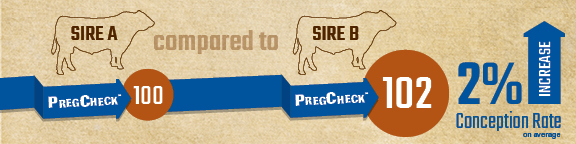
Once you’re done reading how beneficial A.I. can be, read about PregCheck™ fertility rankings, so you can make better mating decisions.


Our March 15th blog post was uploaded in celebration and advocacy of a day near and dear to our hearts - National Agriculture Day. Revisit this post to learn how YOU can agvocate. And check out this blog post as well for a little #WisdomWednesday.

Read our post from April 19th to learn when to pregnancy check and why. Your increased pregnancy rates can thank us later ;)


To celebrate National Beef Month, it only made sense that our May 17th blog post feature one of GENEX’s elite (and no, we’re not referring to our bulls, although those are pretty stellar too, if we do say so ourselves). This post featured one of our many standout Independent Contractors, Duane Frehse.

In June, GENEX Communications Specialist Brenda Brady spent an important (and fun!) day at a local daycare to educate young and eager minds about agriculture.

Since the past six months have been a little more recent, I won’t continue to ramble on with each and every blog post we’ve written since then. However, I will list them here for you to check out for yourself (and I highly encourage you to do so! From educational to light-hearted to personable to GENEX-specific information, we’ve got it all)! We hope to see you back at the GENEX blog next year!


Wednesday, December 21, 2016

From a Delegate's Point of View

GENEX recently wrapped up its fall delegate meetings. Nine different meetings took place giving delegates from across the country the chance to learn of changes taking place within GENEX and an opportunity to provide feedback for the future of the cooperative. I recently had the opportunity to speak with Ron Koetsier, a delegate from California on the delegate experience. Ron is a second generation dairy farmer who now farms in partnership with his son, Ron Jr. They milk 1,150 cows and farm 400 acres near Visalia.

What is the time commitment of being a GENEX delegate? 3 to 5 days a year, depending on where you live and where the meetings are located

Ron participating in the GENEX Fall Delegate Meeting.
What is your experience and/or history with cooperatives? We were members of Eastern A.I. (a GENEX predecessor). We are also members of Land O'Lakes Cooperative, and I have served as a Unit Delegate.

Why did you decide to become involved with GENEX governance? Because I then can provide input into what goes on in the cooperative. Delegate input really does matter. A recent example is the change in requirements to become a member. We were asked to provide our feedback, and the cooperative acted based on it. I also gain a lot of information from other delegates. It is certainly a learning experience. I learn way more than what I put in.

What advice do you have for others who may be considering becoming a delegate? Do it. You will pick up new ideas from the like-minded individuals you are around. It is very enlightening as you will find out how cooperatives operate. Becoming involved is an excellent growing opportunity and everyone can contribute, whether you have 50 or 5,000 cows.


Thursday, December 8, 2016

Ideal Commercial Cows … at the heart of every dairy operation

Hopping in a truck and traveling the back roads of rural America … who doesn’t love this? It’s there that you see the heart of America, dairy farmers, true entrepreneurs, the original business man and woman.

So what is driving today's commercial dairy operations? What is it dairy producers need and want from their genetics and their genetic partners? This question drives what we do here at GENEX day in and day out.

Heifers at a feed bunk on a commercial dairy

Healthy. Trouble-free. Durable. Invisible. Profitable. These are just some of the words you are using to describe what you need on your operation. With meeting your needs as our priority, the concept of a new, innovative genetic index for creating commercial cows was born. After that initial grassroots spark, GENEX launched the Ideal Commercial Cow (ICC$) index in August 2014. Then and now, the ICC$ index is a Holstein sire ranking tool which uses real-time economic indicators and science-based genetic principles to address the needs of commercial dairy producers – your needs. 

Sitting down with real-world dairy producers, such as Darin Dykstra of Dykstra Dairy in Maurice, Iowa, you gain a true perspective on the realities of commercial dairy farming. Darin uses the ICC$ index because it matches his dairy breeding principles. He shares, “I want a functional, durable, long-lasting cow that produces lots of high component milk. The less events she has on her cow card the better. That is a great cow for any commercial dairy farmer."

Don Bennink, an industry-leading commercial producer from North Florida Holsteins in Bell, Florida, and a supplier of elite genetics for A.I. companies across the industry, also shared his perspective on the ICC$ index. He stated, “The Ideal Commercial Cow index is probably the largest step forward we have seen in meeting the commercial producer’s needs.”

Breeding for an Even Healthier Herd
With the December sire summaries, GENEX is helping you breed for even healthier ideal commercial cows. We have announced the addition of three proprietary health traits to the ICC$ index. Subclinical Ketosis (SCK), Metritis (MTR) and Foot Health (FH) breeding values will help you breed for lower BHBA (a cause of ketosis), fewer cases of metritis and fewer foot health issues. We bring you the SCK, MTR and FH values because ketosis, metritis and lameness conditions have both a large presence in modern dairy operations and a large impact on bottom-line farm profitability.

Remember, ICC$ is the summation of five easy-to-use sub-indexes: Health, Production Efficiency, Fertility and Fitness, Milking Ability and Calving Ability. Sub-index values are available for each bull so you can narrow your genetic emphasis to these specific areas of farm management, as needed. The new health traits - SCK, MTR and FH - have been added to the Health sub-index.


Young girl looking at a cow in a hospital pen.

The proprietary traits were established by Cooperative Resources International (CRI) scientists with the International Center for Biotechnology (ICB). In developing the breeding values, the CRI ICB staff used science, research and an extensive database including nearly 4 million cows and 26 million health events. Additionally, the SCK breeding values are the result of CRI ICB staff calculations and collaborative research by professionals at the University of Wisconsin Department of Dairy Science and School of Veterinary Medicine and CRI subsidiary AgSource Cooperative Services. 

You asked. GENEX delivered.
When asked why he uses GENEX as his genetics supplier and partner, commercial dairyman Darin Dykstra answers, “Functional, durable and invisible - that is what I’m looking for. ICC$ selection provides that.”

Monday, November 28, 2016

#RepsThatRock

Genex has a great team of Independent Contractors across the country who serve our members and customers. Each Monday morning during the month of November, we featured one of our #RepsthatRock. on the GenexBeef Facebook page. These folks are so fabulous that we wanted to share their stories on the blog as well. Here’s a glimpse at five; tune-in next spring when we feature another set of representatives. 

Independent Contractor Cassie Herrera has been part of the Genex sales force

for five years and covers the state of Washington. Cassie loves the work she does, stating the best part of her job is breeding cattle and helping ranchers build the herd that best fits them. She also enjoys working on group projects with fellow Genex sales reps and appreciates the knowledge and professionalism each person brings to the table. Outside of work, Cassie enjoys spending time with family, watching her son rodeo, and playing football and basketball. When asked about her favorite beef entrĂ©e, Cassie noted, “Nothing beats a tenderloin steak.”


Mark Fowler has been an Independent Contractor since April 2016, serving

ranches in North and South Carolina. Mark has farmed and raised cattle his entire adult life, and he thoroughly enjoys meeting new customers and viewing standout cattle from elite Genex bulls. He recently attended the Genex Progeny Tour, where he viewed firsthand some of the bulls at Genex Hawkeye West in Montana. In his spare time, Mark enjoys hunting, fishing, going to church, and spending time with his family and friends. Host a cookout with New York Strip (cooked medium well), and Mark will be there!


Dawn Letellier became an Independent Contractor in January 2015, serving

customers in western south central South Dakota. Dawn earned an associate's degree in ag technology from Mitchell Technical Institute, and she currently owns and operates a cow/calf operation. Throughout her time with Genex, she's really enjoyed helping producers select bulls for their herds and seeing the mating results. Dawn's hobbies include reading and hunting. When it comes to beef, Dawn can't pass up a good prime rib.


Tyler and Cassie Schleich are a team of Independent Contractors covering western Illinois. Tyler joined Genex in 2007, and Cassie jumped on board to help her husband in 2012. Cassie and Tyler grew up with beef cattle, and they both pursued agriculture degrees from Western Illinois University. They love having the opportunity to help cattlemen improve their operations; they’ve worked hard to gain customers’ trust and establish strong relationships, which they attribute to the success they have today. While working with Genex, they’ve appreciated the A.I. schools, which is where Cassie learned to breed cattle. When Tyler and Cassie have a chance to get out of the barn, they enjoy spending time by the pool with their daughter and traveling to St. Louis to watch the Cardinals play baseball. When it comes to beef, Tyler loves brisket and Cassie enjoys a beef kabob on the grill.